From strength to strength - the National Deaf and Hard of Hearing NHS Staff Network
Authors
-

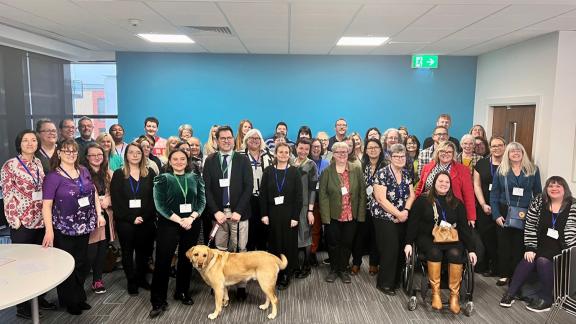
Matthew James, head of equality, diversity and inclusion, NHS England, North East and Yorkshire and co-chair of the National Deaf and Hard of Hearing NHS Staff Network, discusses the journey of the network from its launch to present day.
Did you know the largest deaf and hard of hearing staff network in the world may well be right here in the NHS?
With over 640 members, the National Deaf and Hard of Hearing NHS Staff Network continues to grow rapidly and with the NHS being one of the world’s largest employers, it’s no surprise that our workforce includes a huge community of colleagues with hearing loss. In fact, based on the national prevalence of deafness and hearing loss, the network estimates that 1 in 6 NHS staff might be deaf or hard of hearing.
How the network began
The NHS has long supported staff through a wide range of networks covering ethnicity, lived experience, disability, women, and LGBTQIA+ communities. Yet a national network created specifically for deaf and hard of hearing staff is comparatively new.
The first group was formed in 2018 within NHS England, developed by staff who wanted a dedicated space to discuss their hearing loss. Many members didn’t identify as disabled, they simply wanted a place for understanding, peer support, and practical discussion.
This early network quickly grew, especially when colleagues from across the wider NHS were invited to join. The COVID-19 pandemic highlighted stark inequalities for deaf and hard of hearing staff, particularly those working on the frontline.
Key issues emerged, including:
- Struggles with sourcing transparent face masks.
- Staff becoming redeployed because communication needs couldn’t be met.
- Trainees facing barriers in clinical placements.
- Limited access to health and wellbeing services.
- Lack of workplace understanding about reasonable adjustments.
A historic first: Bringing the deaf and hard of hearing community together
In March 2023, something remarkable happened: the first ever NHS-wide, face-to-face event for deaf and hard of hearing staff took place. More than 115 colleagues came together to share their experiences, define common themes, and shape what would become the national network as it exists today. This gathering led to the establishment of the network exactly a year later.
The network has continued to meet regularly and is led by a diverse group of deaf and hard of hearing colleagues from every part of England and from all types of roles. We’ve held two major national events so far - in Birmingham in 2024 and Brighton in 2025 - with these planned annually.
Where we are today
Despite not yet being aligned to a formal NHS body, the network runs entirely through the volunteer time of its leadership group who meet every week, often during their lunch breaks, to create a safe and supportive space for others.
We host:
- bi-monthly webinars
- peer-support sessions
- allyship opportunities
- guidance for organisations wishing to build their own local networks.
However, real change must happen outside the network, within everyday teams and workplaces. That’s why we also advise organisations on building supportive environments for their deaf and hard of hearing staff.
What members are asking for
A few clear priorities have emerged:
1. Primary care support
A new sub-group has already formed with around 60 members, focusing on the unique needs of primary care staff. This sub-group is called Deaf Buddies. For more information or to join the sub-group, contact joanne.reeve@hyms.ac.uk.
2. Reasonable adjustments
Colleagues often ask how to access workplace adjustments quickly - without long delays or inconsistencies. In our webinars this is an ongoing topic and greater clarity of the options around us are coming together. We are preparing a booklet of equipment known to be useful to our deaf colleagues, to be released next year.
3. Access to work guidance
Members frequently seek clarity on how best to use Access to Work for interpreters, communication support, and assistive equipment. Some members of the network are experts on this subject and can advise.
Looking ahead
As the NHS continues to evolve, so too does the network. The leadership group is now exploring options to become an official national staff network - ensuring long-term stability, funding, and visibility.
And we’re already looking ahead to September 2026, when we’ll host our next major gathering of deaf and hard of hearing staff from across the NHS.
For more information and to join the network, please contact england.dhohstaffnetwork@nhs.net.

